Meme coin trading versus holding which approach wins for most retail traders
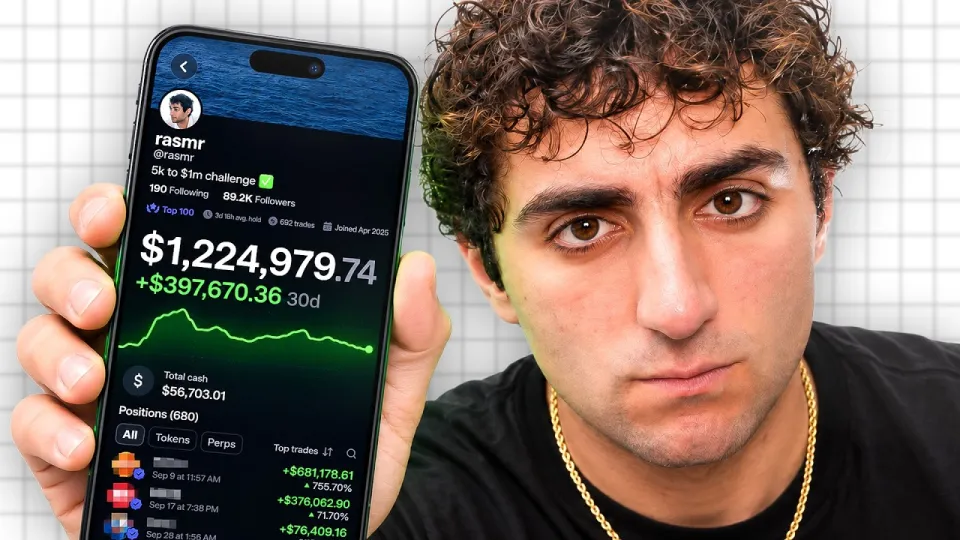
Video: 5 Years of Memecoin Knowledge in 12 Minutes
Want articles like this for your own video to promote it on YouTube and Google? Order them through the Telegram bot @sat_sit_bot. It writes articles around your video, embeds the video and publishes them on popular niche websites (no ads). Free trial — 50 articles.
· based on the channel rasmr
For most retail traders, meme coin trading with pre-set exit rules beats simply holding, because meme coin prices are driven by narrative and liquidity rather than cash flow, so the moment of selling matters more than the asset itself. Holding only works when the position size is small enough to survive an 80–90% drawdown and the thesis is checked regularly. Everything else is a timing decision that has to be made before the chart starts moving.
The rasmr breakdown "5 Years of Memecoin Knowledge in 12 Minutes" compresses that experience into a practical checklist, and the trading venue linked in the description is available via registration on FOMO. Below is a standalone guide to the mechanics behind the checklist: how meme coin cycles work, where exits are usually planned, and which mistakes repeat across every cycle.
What actually moves a meme coin price
A meme coin has no revenue, no product roadmap that can be valued, and no earnings multiple, so its price is a function of attention, liquidity and the willingness of new buyers to pay higher than the last ones. That makes three variables dominant: the narrative the token rides, the size of the liquidity pool, and the speed at which early holders distribute their supply.
- Narrative decides who shows up. A token tied to a live cultural event, a political moment or an established internet meme attracts a wider audience than a generic dog or frog clone.
- Liquidity decides how violently price moves. Thin pools mean a few thousand dollars of sells can wipe out a third of the chart.
- Holder distribution decides how long a rally lasts. If a small cluster of wallets holds most of the supply, the move ends when they decide it does.
Because none of these are visible on a price chart alone, traders who only look at candles are effectively guessing. The practical work happens before the entry: reading who launched the token, which community is amplifying it, and how concentrated the supply is.
Why market cap beats token price as a reference point
Token price is a distraction in meme coins because supply is arbitrary: a token at $0.00001 and one at $4 can have identical valuations. Market cap, calculated as price multiplied by circulating supply, is the only comparable number across launches.
That matters because exits in meme coins are usually planned in market cap terms, not price terms. Typical reference zones that traders watch:
- $1–5 million — the launch and early accumulation zone, where most failed tokens die.
- $10–30 million — the first real test, where early buyers who entered at launch start taking initial profit.
- $50–100 million — the zone where a token needs sustained outside attention, not just a launch community, to keep climbing.
- $500 million and above — rare territory that requires a narrative broad enough to reach traders who never touch micro caps.
Knowing where the crowd typically sells is more useful than any indicator, because it tells you where supply will appear. A trader who buys at a $3 million market cap and plans to sell a portion at $20 million has a defined plan; one who buys and waits for "more" has a lottery ticket.
The exit discipline problem behind most losses
Nearly every recurring loss story in meme coins follows the same pattern: an unrealized gain of several multiples, no selling, then a full round trip back to the entry price or below. The chart did not do anything unusual — the holder simply never converted paper profit into realized profit.
A workable structure looks like this:
- Decide the sell ladder before buying. For example, sell 25% at 3x, 25% at 6x, and let the remainder run with a trailing stop.
- Take the initial capital out early. Once the first tranche covers the original stake, the rest of the position is played with house money, which removes most of the panic.
- Never move the stop loss downward. Widening a stop to avoid a loss is the single most expensive habit in this market.
- Write the plan down. A plan held only in memory gets rewritten by adrenaline within minutes of a vertical candle.
Holding a large unrealized profit and refusing to sell is not conviction; it is an unset exit. The market does not reward patience in assets that have no fundamentals to revert to.
Emotions, averaging down and the cost of hope
Emotion is the largest single expense in meme coin trading, and it shows up in two symmetrical forms: greed on the way up and hope on the way down. Both are avoidable with rules that are set in advance.
On the way up, the failure mode is buying more after a token has already doubled or tripled because the chart "looks strong" — effectively top-blasting into the zone where earlier buyers are distributing. On the way down, the failure mode is averaging down on a losing position, which converts a small planned loss into a large unplanned one. A losing meme coin position rarely recovers, because the attention that created the move has already moved to the next launch.
Practical guardrails that experienced traders use:
- Cap the size of any single meme coin position so a total loss does not affect the broader portfolio.
- Predefine a maximum acceptable drawdown per trade and honour it without renegotiation.
- Avoid adding to a position that is already below the entry unless the original thesis explicitly included a second entry level.
- Step away from the screen after a large realized win; the urge to redeploy immediately is where gains disappear.
The experience shared by newer traders in the comments under such breakdowns is consistent: the first month is usually the most expensive, and the losses are almost always emotional rather than analytical.
How to judge rug risk before entering
Rug risk is the probability that insiders remove liquidity or dump supply on holders, and it can be estimated before buying rather than discovered afterward. No checklist eliminates the risk, but a few structural checks filter out the worst setups.
- Check who holds the supply. A cluster of fresh wallets holding a large share, funded from the same source, is a warning sign.
- Check liquidity lock and pool size. Unlocked liquidity in a thin pool means the deployer can withdraw it at any moment.
- Check the deployer's history. Wallets that previously launched tokens which died quickly tend to repeat the pattern.
- Check the narrative's shelf life. A token tied to an event that ends in a week has a much shorter window than one tied to an ongoing cultural theme.
- Check how the launch was announced. Tokens distributed quietly to a connected group before public launch leave retail buyers holding the exit liquidity.
None of these checks requires advanced tooling — block explorers and launchpad pages show holder distribution and liquidity status directly.
Common questions traders ask before their first position
Newer traders tend to ask the same handful of questions, and the answers are mostly about sizing and expectations rather than picking the right token.
- How much capital do I need? Small capital is fine and arguably preferable for the first cycle; the goal is to learn the mechanics without a painful loss. Position sizing matters far more than the size of the account.
- Should I start with a token tied to a big upcoming release or event? Event-driven narratives can work, but they expire. The exit has to be planned around the event date, not after it.
- Is it better to trade many launches or concentrate on one? Concentration with a written plan usually beats spraying capital across ten tokens with no exit rules.
- How do I know when a move is over? Volume fading while market cap stalls, combined with early wallets sending tokens to exchanges, is the most common tell.
Useful links
- FOMO trading platform via rasmr referral — the venue linked in the video description for trading.
- Catalyst trading group on Discord — the community chat referenced alongside the breakdown.
Final thoughts
Meme coin trading rewards preparation and punishes improvisation, which is why a written exit ladder and a fixed position size outperform any chart pattern in this market. The rasmr video condenses five years of that experience into a short checklist, and the value is in applying the rules before the next launch rather than after the next loss. Start small, define where you sell before you buy, and treat every unrealized gain as temporary until it is realized. If you want to follow the same workflow, you can sign up through the rasmr referral link and join the discussion in the linked community.
Key takeaways
- Meme coin prices are driven by narrative and liquidity, not cash flow, so entry and exit timing matters more than the asset itself.
- Most retail losses come from round-tripping unrealized profit and averaging down on a losing position out of hope.
- Market cap, not token price, is the practical reference point for planning where early buyers usually start selling.
- Knowing who launched a token and which narrative it rides helps judge how long a move can last.
- Emotion-free rules set before entry outperform improvised decisions during a live chart.
Questions & answers
Is meme coin trading better than just holding?
For most retail traders, yes, because meme coin prices depend on attention and liquidity rather than earnings, so timing the exit matters more than the asset. Holding can work only with a small position size and a thesis that is rechecked regularly, since deep drawdowns of 80–90% are normal.
How do I avoid round-tripping a large profit?
Set a sell ladder before entering, for example selling a quarter of the position at 3x and another quarter at 6x, and take out the original capital early. Never move a stop loss downward to avoid realizing a loss.
What signals a likely rug before I buy?
Concentrated supply in fresh wallets funded from one source, unlocked liquidity in a thin pool, and a deployer with a history of dead launches are the main red flags. Also check whether the token was distributed quietly to a connected group before the public launch.
Why do traders talk about market cap instead of token price?
Token supply is arbitrary, so price alone says nothing about valuation. Market cap, price times circulating supply, is comparable across launches and is the unit in which most exit plans are written.
Source: 5 Years of Memecoin Knowledge in 12 Minutes · Markdown version